 Digital Art Museum Tokyo
Is teamLab Worth It? An Honest Answer
Last reviewed August 2026
Is teamLab worth it is a question people ask after seeing the photographs and getting suspicious, which is fair. Here is the verdict with its reasons: yes for most visitors, and a clear no for several specific groups. Both cases are set out below, along with the complaints that come up again and again, and which of them you can fix before you book.
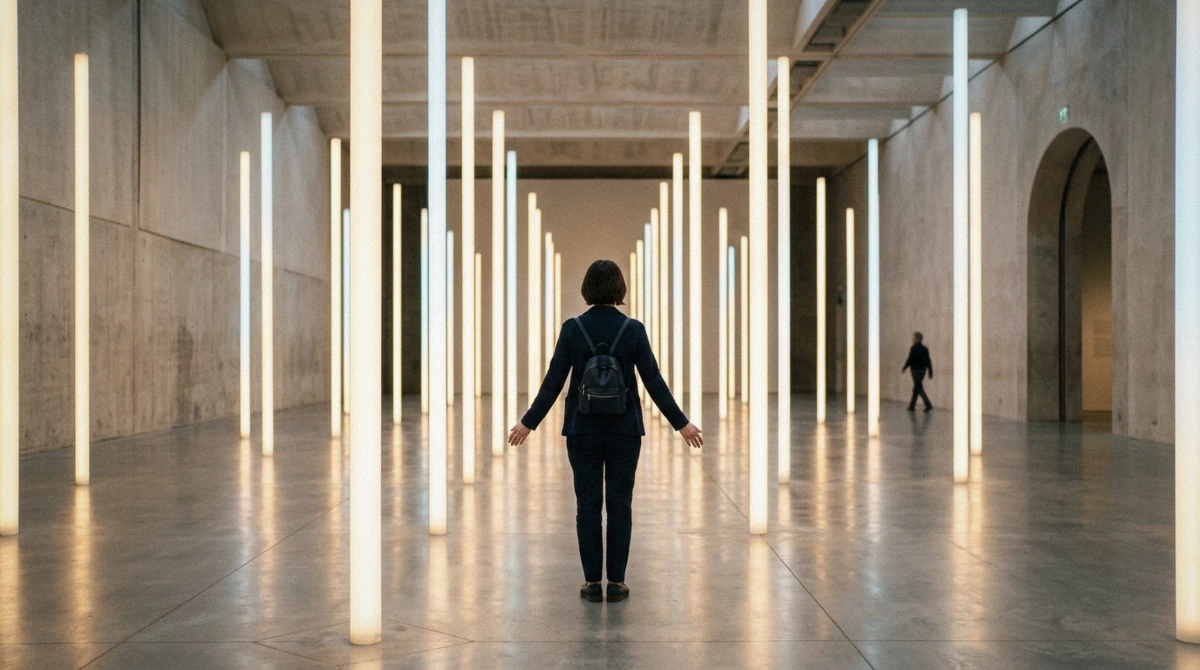
Quick answer The verdict, and who should skip it
Yes for most people, and the numbers back it up: the teamLab Planets ticket holds 4.6 from 13,437 verified reviews, the largest verified review count of any teamLab listing on the platform, and adult admission at JPY 3,600 is ordinary money for a Tokyo attraction. No if you cannot go barefoot through knee-deep water, if flashing light is a health issue, if you need step-free access at Planets, or if you want a museum you can plan and tick off, that last one rules out Borderless, which publishes no map on purpose.
Key takeaways
- Adult admission is JPY 3,600 at Planets and JPY 3,600 to 5,600 at Borderless, normal Tokyo attraction money
- Neither museum limits your time inside, which is what reviewers praise most
- The two loudest complaints are the queue and the distance to Toyosu, and only one of them is fixable
- Health and mobility exclusions are real and specific: who should not book
- Undecided between the two? The comparison splits them in four lines
- Planning how much time to block changes the answer more than the price does
The Case For Going
Three arguments, none of which is about the photographs.
You are inside the work, and that is not marketing
At most attractions the thing you paid for happens in front of you. Here it happens around you and reacts to you being there.
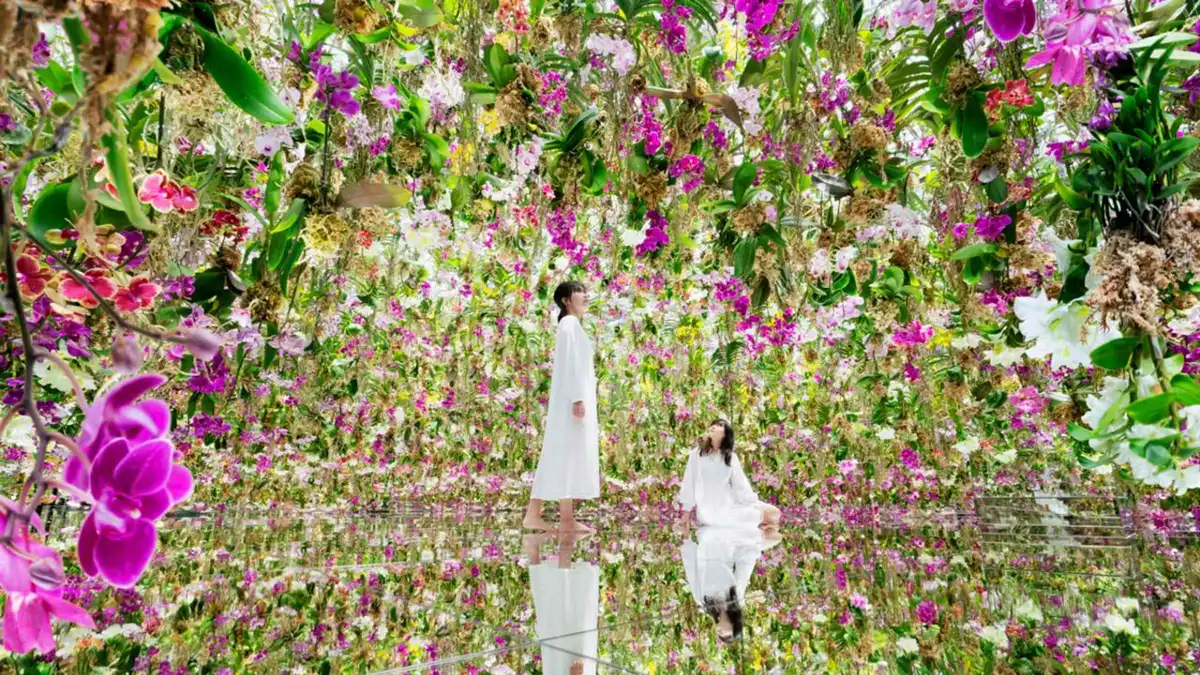
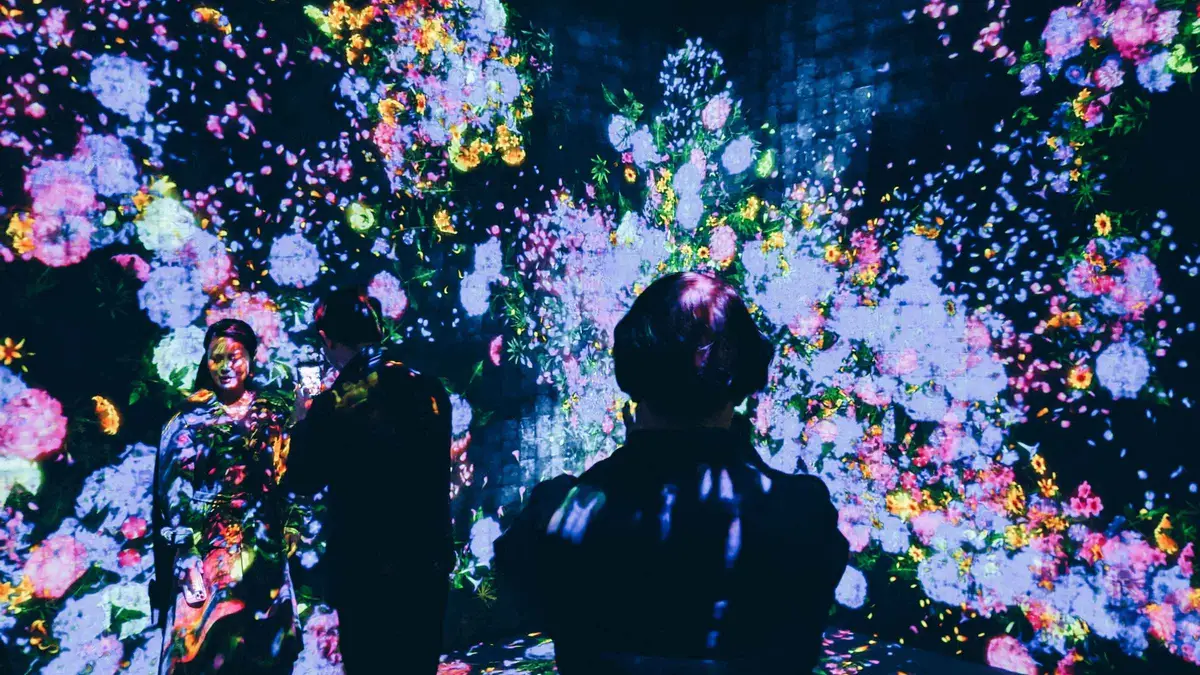
At Planets, koi swim across the water you are standing in, and when one touches a person it bursts into flowers and scatters. The flowers change with the season, so the room in April is not the room in November. In Floating Flower Garden, living orchids rise as you approach and open a pocket of air; walk towards someone else and your two pockets merge into one.
A traveller from the United Kingdom, writing in August 2026, described the combination of digital art, water, mirrors, lights and nature as completely unlike a typical museum, and singled out being genuinely part of the artwork rather than looking at it. That is the recurring note across the reviews, and it is the honest reason to go.
Nobody rushes you
There is no time limit at either museum once you are admitted, and neither makes you leave before the next admission slot.
This sounds like a technicality and is not. It is the single most-praised thing in recent reviews, people repeatedly say they took their time and did not feel hurried, which is rare at any timed-entry attraction.
The one limit is room-level and only at Planets: at busy times staff will move you along if you have settled in one spot for a long stretch. You can still stay in the building as long as you like.
The price is unremarkable, which is the point
Adult admission is JPY 3,600 at Planets and JPY 3,600 to 5,600 at Borderless, where pricing moves by date. Children 4 to 12 pay JPY 1,500 at both, and under-4s are free.
For two to three hours indoors in central Tokyo, that is ordinary money, comparable to any major observation deck or aquarium, and less than most guided experiences. The entry ticket compared here sits around $23.
So the price is not the reason to hesitate. The reasons to hesitate are physical, and they are below.
| What you pay | teamLab Planets | teamLab Borderless |
|---|---|---|
| Adults 18+ | JPY 3,600 | JPY 3,600 to 5,600 |
| Teens 13-17 | JPY 2,800 | JPY 2,800 |
| Children 4-12 | JPY 1,500 | JPY 1,500 |
| Under 4 | Free | Free |
| Disability certificate | JPY 1,800 | Discounted, certificate checked |
| Priority entry | Premium Pass, JPY 12,000 | Not sold |
| Time inside | No limit | No limit |
The Case Against, and Who Should Skip It
Some of this is fixable before you book. Some of it is not.
Not fixable: the health and mobility exclusions
The Planets platform listing states plainly that the experience is not suitable for wheelchair users, people with heart problems, or people with epilepsy. One area uses strong stimulating light and another is genuinely dark.
The museum's own notes are softer, describing detour routes staff will arrange for visitors with disabilities or with children who want to skip an artwork. Both things are true at once: a detour exists, and barefoot passage through water on mirrored floors is not step-free access.
For safety reasons, pregnant visitors are not permitted in some areas of Planets.
If mobility is a factor, Borderless is the museum built for it: wheelchairs are admitted, wheelchairs are loaned, and there is an accessible escalator, with two caveats the museum states itself, that some works cannot be experienced from a wheelchair and the number admitted at once is capped.
| If this applies to you | teamLab Planets | teamLab Borderless |
|---|---|---|
| Wheelchair user | Listed as not suitable | Admitted, numbers capped, some works excluded |
| Epilepsy | Listed as not suitable | Dark rooms and moving projections |
| Heart condition | Listed as not suitable | Not listed as a restriction |
| Pregnant | Barred from some areas | Not listed as a restriction |
| Cannot be barefoot | Not possible, the route is barefoot | No issue, shoes stay on |
| Travelling with a stroller | Front carriers allowed | Strollers not allowed inside |
| Wants a route to follow | Fixed path through separate rooms | No map and no route, by design |
Not fixable: you have to be barefoot and you will get wet
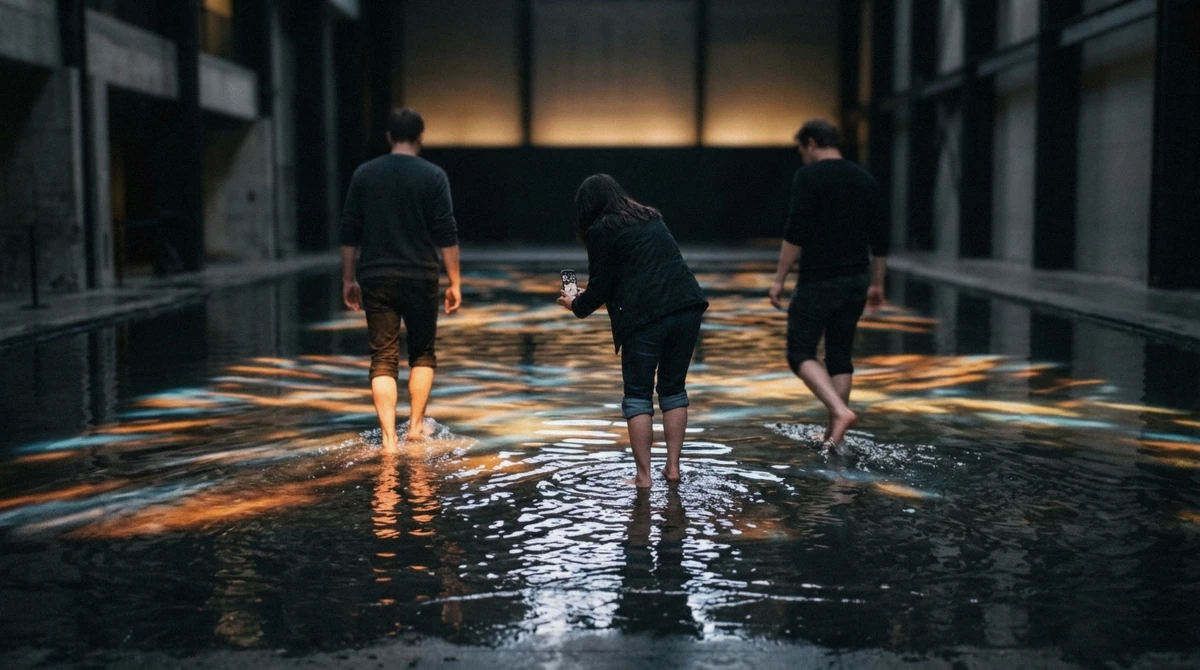
At Planets, shoes come off at the lockers, and so do socks and stockings. The water in the artworks rises to knee height on an adult.
Wet clothes are not allowed into the next artwork, so if you arrive in something that does not roll up, part of your visit becomes a rented towel and a corridor. The museum lends free shorts in sizes XS to 6L for the mirrored floors, and free shoes if yours have no heel support, but you have to ask.
For some people that is the whole answer, and it is a perfectly good one. Borderless keeps your shoes on and has no water anywhere in it.
Not fixable: Borderless refuses to be planned
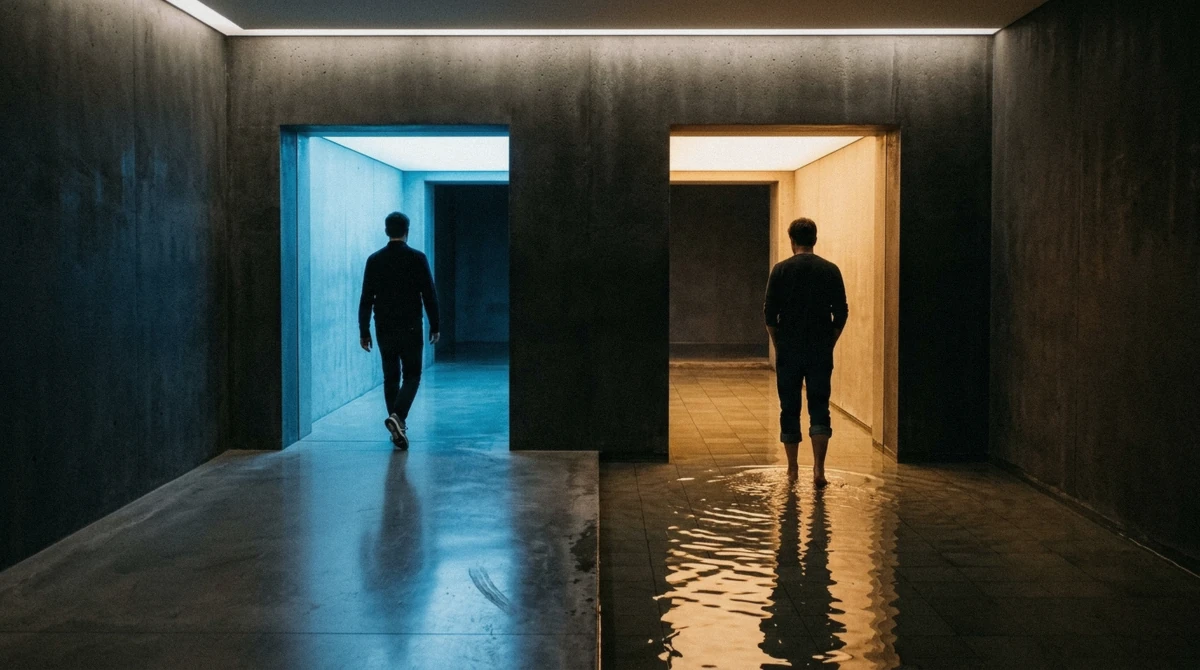
Borderless publishes no map, hands out no floor plan and puts no captions on the walls. This is deliberate, the works physically move between rooms, so there is nothing stable to map, and the teamLab app tells you about whichever work is nearest.
The predictable consequence is the museum's most common complaint: people arrive having seen a specific room in a photograph, cannot find it, and leave feeling they missed the point. They did not miss anything; the design worked as intended.
If you are the kind of traveller who wants to know what you paid for and see all of it, Planets, fixed route, delineated rooms, everything in order, is the museum that will satisfy you.
Fixable: the queue and the trek
The two loudest complaints about Planets are the entry queue and the distance to Toyosu. One traveller from Australia, in August 2026, said the museum is very far from central Tokyo, roughly an hour, that the queue is very long and that on a hot, cold or rainy day it tests your endurance. They still rated it five stars and called it worth the hassle.
The queue is fixable two ways: go at 8:00 or take the 20:30 slot, or buy the Premium Pass at JPY 12,000, the only priority-entry product either museum sells. Borderless has no equivalent, though it may hold visitors outside when the building is full.
The distance is not fixable, but it is knowable, and it is the strongest argument for choosing Borderless if your time in Tokyo is short, since it sits two minutes from Kamiyacho station and connects underground.
Worth It at a Glance
What we genuinely like
- 4.6 from 13,437 verified reviews on the best-selling listing
- No time limit once you are admitted, at either museum
- JPY 3,600 adult admission is ordinary money for central Tokyo
- Works that react to you being there, not screens you watch
- Both museums are indoors and run in any weather
- Children 4 to 12 pay JPY 1,500 and under-4s go free
The honest downsides
- Planets is listed as unsuitable for wheelchair users, heart conditions and epilepsy
- Barefoot through knee-deep water is not optional at Planets
- Wet clothes are not allowed into the next artwork
- The entry queue at Planets is the most common complaint
- Toyosu is a long way from central Tokyo
- Borderless has no map, no route and no captions, by design
- Neither museum permits re-entry
Who it's NOT for: Anyone who needs step-free access at Planets, anyone for whom strong flashing light is a health risk, and anyone who wants a museum they can plan, tick off and finish.
What It Costs to Find Out
Admission tickets carry no time limit once inside. The guided options fix the museum portion at 1.5 hours, add a guide who explains the works, and cancel free up to 24 hours before. Prices and ratings read from the listings in August 2026.
teamLab Planets TOKYO Digital Art Museum Entry Ticket
The Toyosu museum where you go barefoot and wade through the art. Pick an entry window, arrive within 30 minutes of it, then stay as long…
- Cancellation
- Non-refundable
- Operator
- LINKTIVITY Inc.
teamLab Borderless Admission Ticket, Azabudai Hills
The only way to buy Borderless admission on its own without a guided tour attached: teamLab sells tourist tickets through Klook. Adult admission is dynamically priced…
- Cancellation
- Check the platform terms
- Operator
- teamLab, sold via Klook
teamLab Borderless & Imperial Palace History Tour
Ninety minutes inside Borderless with a guide who explains the works, then a walk to the Imperial Palace East Gardens and the Edo Castle stone walls…
- Cancellation
- Free cancellation 24h
- Operator
- MARKEVISION株式会社
teamLab Borderless & Roppongi Hills Skyline Tour
Borderless first, then Roppongi Hills: Louise Bourgeois's Maman spider and 360-degree views over Tokyo Tower from the observation deck. Same operator and the same 1.5 hours…
- Cancellation
- Free cancellation 24h
- Operator
- MARKEVISION株式会社
Worth It For Whom?
If you came to Tokyo having seen the koi-and-water photographs
yes, and the museum you want is teamLab Planets
If you have half a day and are staying in central Tokyo
yes, but take Borderless and skip the trek to Toyosu
If anyone in your group uses a wheelchair
Borderless only, and call ahead, because the number admitted at once is capped
If strong flashing light is a health risk for you
no to Planets, which the listing rules out explicitly
If you want to know exactly what you saw afterwards
Planets, or a guided option from the digital art museum tickets and tours
If you are travelling with under-fives
yes, and they go free, but read the ratios and stroller rules first
If you hate queueing more than you hate spending
the Planets Premium Pass at JPY 12,000 is the only priority entry either museum sells
Tokyo or Kyoto? The Biovortex Question
A question that did not exist two years ago and now shows up in the search results for both cities.
The third museum changes the maths
teamLab Biovortex Kyoto opened on 7 October 2025, seven minutes on foot from the Hachijo East Gate of Kyoto Station. It covers more than 10,000 square metres across four floors with over 50 artworks, which makes it larger than either Tokyo museum, and it passed one million visitors on 6 July 2026.
If Kyoto is already on your itinerary, this matters. Two teamLab museums in one trip is plenty for most people, and one in each city is a better spread than two in Tokyo and none in Kyoto.
If you are only in Tokyo, it is irrelevant, and the specific images that made you search for this are still at Planets, in Toyosu. Biovortex is not bookable here and nothing on this site sells it.
For Tokyo itself, the teamLab museum tickets are compared in one place.
Before You Decide, Know These Three Rules
None of them appears prominently at the point of sale, and all three cost people money.
The rules that catch people
No re-entry, at either museum. Once you walk out, the ticket is finished. At Planets there is a restaurant inside, so this is manageable; at Borderless there is no restaurant or cafe at all, only vending machines, so eat first.
The 30-minute entry window. On the entry ticket compared here, you can only go in within 30 minutes of the time on your voucher, with no refund for late arrival, and the listing does not sell same-day tickets. The museum itself is more forgiving in practice, speak to staff and you can usually enter later the same day, but that is goodwill, not policy you can plan around.
Planets closes at the end of 2027. That date has moved twice already, from 2022 and then from 2023, so it may move again. Borderless is permanent, at Azabudai Hills since 9 February 2024. For a trip this year it changes nothing; for a trip planned into 2028 it changes everything.
All four bookable options, with what each includes, are compared on the digital art museum tickets and tours page.
- Neither museum refunds a ticket once you have entered
- Planets tickets cannot be cancelled at all after purchase
- Resold tickets are refused at the door at Planets
- Borderless tickets bought on the official site can move date up to three times
Worth-It Questions
Is teamLab Planets worth it?
For most visitors, yes, it holds 4.6 from 13,437 verified reviews and the artworks you have seen photographed are all here. It is not worth it if you cannot go barefoot through knee-deep water, if flashing light is a health risk, or if you need step-free access, since the listing rules all three out. Full detail on the museum.
Is teamLab Borderless worth it?
Yes if you want to wander with no route and no checklist, and it is the more convenient of the two, two minutes from Kamiyacho. It is not worth it if you want to find one specific room you saw in a photograph, because the museum publishes no map on purpose and the works move between rooms. More on how it works.
Which teamLab is better, Tokyo or Kyoto?
Kyoto's Biovortex is the largest of the three, at over 10,000 square metres with more than 50 works, and it opened in October 2025. If you are visiting both cities, one in each is the better spread. If you are only in Tokyo, the question does not arise, and the water and orchid rooms people search for are in Toyosu.
How long does it take to go around teamLab Tokyo?
About 90 minutes to two hours at Planets, two to three hours at Borderless, with no limit imposed at either. Add the queue, the lockers and any drying off, and it is a three-hour block in practice. The full timing breakdown.
Is it too crowded to enjoy?
At busy times, yes, the queue at Planets is the most common complaint, and Borderless may hold visitors outside when the building is full. Both open early, at 8:00 and 8:30 respectively, and the first hour is the quietest of the day at either. That single change fixes most of the crowding complaints.
Is teamLab suitable for young children?
Generally yes, and under-4s enter free. Planets requires one adult per three children and allows front baby carriers; Borderless requires one adult per five and does not allow strollers inside. Both have works small children respond to, though Planets tends to hold their attention better.
Should I buy the Premium Pass?
Only if your date is busy. At JPY 12,000 for anyone 4 and over it costs more than three times the adult Entrance Pass and buys no extra art, it removes the fixed entry time and gives priority entry. On a quiet weekday, an early slot does the same job for nothing.